
The Dukesbridge Journey
Our determination to question everything has prompted us to create a unique thematic approach towards acquiring knowledge that builds on prior learning
The Dukesbridge Journey
Our determination to question everything has prompted us to create a unique thematic approach towards acquiring knowledge that builds on prior learning
3 Months
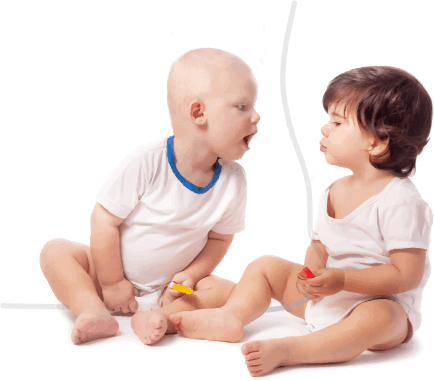
CUBS is for our littlest babies who join Dukesbridge between 3 to 12 months of age. The curious baby is getting the hang of lots of new things at this stage: eating (and playing with) solid foods, sitting unassisted, sleeping on a schedule (with two naps!) and making new sounds. The babies grow and learn every day. We provide a safe and nurturing “home-away-from-home” where babies can explore and make new discoveries. Not only are they more interested in the world around them, they’ll soon be crawling, cruising or walking around in it. There’s no stopping their progress into toddlerhood, and our team will help them reach the next stage.
CUBS
Dukesbridge has created an environment which invites responses from babies for example touching, smiling, smelling, feeling, listening, exploring, describing and sharing. The little ones are stimulated and encouraged to check out the world around them through experimenting with a range of media and sensory exploration: banging two objects together, placing objects into containers, a ball for rolling or throwing, a toy car for pushing. During their time in the Cubs section, the babies will learn how to sit and lean forward to pick up small toys, pull to standing, holding on to furniture or person for support, crawl, bottom shuffle or roll continuously to move around. They will develop their gross motor skills, getting prepared to walk. To promote communication and language, our Cubs’ carers use stories, songs and rhymes. When we use carefully selected nursery rhymes (both in French and English), we help children understand the words by using actions as well and encourage them to join in. First words maybe?
12 Months
Our Bubs group is for children who have just turned 1 until the start of the next year when they transition into the Tots group. In the Bubs group, children are exposed to the English language through immersion with a fun routine involving lively nursery rhymes, singing, dancing and loads of exploratory play specifically designed for the milestones of this age group with 4:1 ratio of children to caregivers. The Bubs program is an optional year with two terms and was created to accommodate the demand from working parents, but also for those who would like to ease their child into preschool and want more than just a babysitting, more intentional learning.

BUBS TERM 1
Repetition is key to developing strength and coordination, but it is never boring! Our carers have a huge repertoire of different activities that cater for each developmental requirement and they carefully watch how the children go about the tasks and tweak them as necessary to keep the kids engaged. In order to strengthen gross motor skills, we have active playtime three times per day and some of our activities include chasey, hide and seek, throwing, catching and kicking balls, running around in the garden, dancing, climbing in and out of boxes/tubs/etc and using our playground equipment. To focus on fine motor development, some of the activities are play dough, hole poking activities (e.g. pipe cleaners through a kitchen colander), posting, flap play, opening and closing containers and bottles (screw tops, snaps or flip-tops). Our teachers are very conscious though to allow the students to work at their level as, at this age, the motor skills and coordination of an 11-12 months old is quite different to those of a 16-17 months old.
BUBS TERM 2
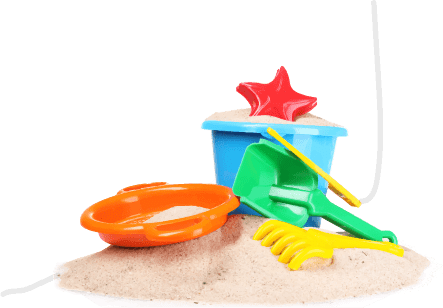
Games such as sorting, matching, large piece puzzles, web baskets, pipe cleaner tangle, shape sorters help to pique curiosity and assist with cognitive development. Sensory play is an important way for children to naturally use scientific processes while they play. Sensory activities are anything that uses the senses (movement, balance, smell, touch, taste, sight and sound) so some of our favourites are edible finger painting, newspaper floor (auditory learning as they crawl across it and hear the crackling), water play, sand play (e.g. hidden toys in a tray of sand for the children to find), sensory bin- different texture/sized objects lentils, red beans, macaroni are placed into a large container and the child is given a large spoon/ scoop/ cup to scoop and pour. Water is added to this once they get a bit bored with it to add another dimension to the sensory element, seeing which objects sink and float, and the list goes on.
18 Months
Our Tots group is for children who turn 2 in that particular academic year. Toddlers would ideally join the group when they turn 18 months old. It is a compulsory year as it lays the foundation for the whole preschool cycle at Dukesbridge. We have intakes at the beginning of Terms 1 and 2. The programme starts with an adaptation for at least 2 weeks during the school holidays prior to the beginning of term. The children who have completed our Tots programme tend to display remarkable comprehension, language skills and cognitive ability upon which much is built in their next years at Dukesbridge, hence why it is compulsory.

TOTS TERM 1
During the year, Tots are exposed to 150-200 words of the English vocabulary. These are grouped into various categories such as food items, farm animals, transportation etc. As each student around the table attempts to repeat out loud the word articulated by the carer, our Dukesbridge flashcards provide the visual element for what the word represents. The words are written at the bottom of each image and as the toddlers become used to seeing them everyday, they start establishing a pattern for the sounds that some letters make. This invaluable technique helps a child pick up phonics with ease in the ELY class. Each category of words is cycled through a week to 10 days. Everyday, after saying out loud the words in the entire category, children then focus on one item in that category through an activity designed to help them further explore its meaning or use. The activity usually involves tangible and sensory elements and promotes their innate sense of curiosity. For instance, during the week of learning fruit names, the Tots get to touch and feel an orange, peel it, squeeze it, make juice from it and taste it. To wrap up the category of words explored at the end of the week or 10 days, two sets of flashcards are used in order to initiate toddlers to problem solving. Each child takes his or her turn to select the matching flashcard to make a pair.
TOTS TERM 2
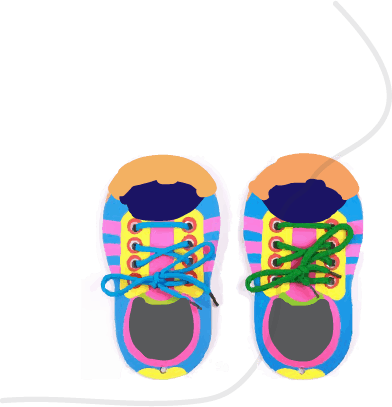
Before a child is able to write, he or she needs to be able to hold a pencil properly (the grip). This requires a certain degree of strength in the finger muscles as well as the ability for the child to synchronise hand and fingers with the eye. As the children get more and more into their language development lessons which carry on throughout the term, the theme-based activities are purposefully designed to give ample opportunity to the children to develop their fine motor skills. For instance, shoes are part of the items of clothing category; on the day the class focuses on shoes, children use their tiny fingers to thread laces through a make-shift carton shoe with holes. These methods stimulate the toddlers to explore in a carefully-prepared learning environment which meets them at their level and exposes them to materials and experiences that stimulate cognitive, language and physical development all at once.
TOTS TERM 3
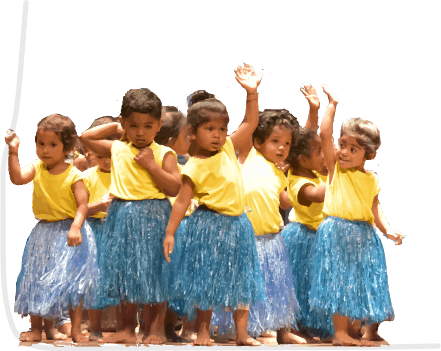
The language development sessions alongside the theme-based activities carry through till the end of the third term. Additionally, the acquisition of social skills at this age goes a long way in the development of one’s personality which has a significant impact on how well that child progresses right through to adulthood. Through role-play in the corners and other daily routines, children learn to recognise emotions, to consider their impact on their peers and to share. Dukesbridge also recognises the value in the Montessori approach of mixing children of different ages and devotes the first part of the day to a mixed-age assembly uniting preschool students of all ages. This essential part of our timetable, usually the highlight of the day for many, is the perfect way to start the school day as toddlers observe their older friends dancing, singing, speaking and interacting with each other. The family-type structure encourages the toddlers to learn from the older kids and the latter are encouraged to act as role models to the little ones. It is amazing to see how much they pick up from being around the older children and most of our Tots perform on stage as part of the end-of-year school musical production.
3 Years
ELY class is for students who turn 3 in that particular academic year. Depending on the campus, we typically have an Upper ELY section for those turning 3 in the first half of the year and a lower ELY section for those turning 3 in the second half. Whilst we would generally have 12-15 students in one section, the lower ELY section tends to have additional adult assistance and children may still have their day nap after lunch. Phonics, the precursor to reading, is introduced in ELY; children will not know the names of the letters but rather the sound that they make – for instance, they will learn that letter p makes the sound “puh” rather than the name “pee”. Language development is a key focus of ELY.
ELY TERM 1
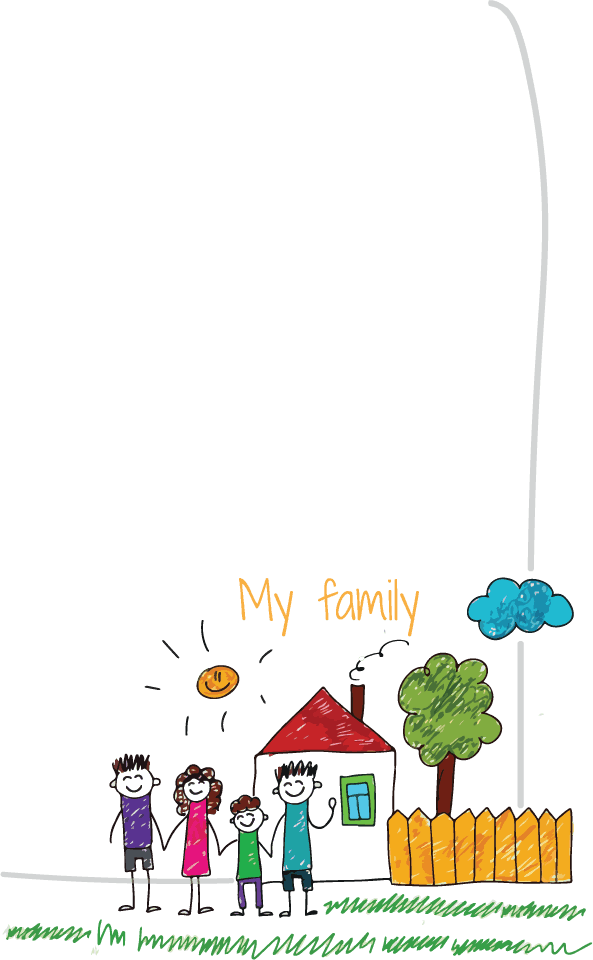
The first term is all about My Family as the children learn more about their immediate environment and build their vocabulary by role-playing with props and each other. Within the first couple of weeks of term, parents provide labelled photos of the grandparents, parents and siblings for the family tree. Phonics is introduced with beginning sounds of images and objects children are familiar with. Children are encouraged to use directional fingering for the letters as they sound them, but also start working on their pencil grip to draw straight lines and curves depending on their fine motor development. They begin to recognise some numbers and identify the basic colours and shapes in a fun and exploratory way. For instance, we have single colour corners and for the first month, each week is focused on one colour whereby the child is encouraged to independently find items which are of that colour and bring them to the colour corner. This activity is done both at home and at school to help the child grow in confidence. ELY classes usually go on an outing with the parents a couple of weeks before the break-up party when the children come dressed up as an elder member of the family: mum, dad or a grandparent.

ELY TERM 2
The theme for the second term is My Body. During the first week, a real life body cut-out of each child is made out of construction paper. Throughout the term, as the child learns about a new part of his or her body, he or she gets to do an activity on their own body cut-out – colouring, painting, collage, etc. They learn how to become more independent in terms of potty-training and getting dressed, for example putting on a jacket, hats, gloves and shoes. Phonics lessons continue with more letters of the alphabet and children learn counting to 9. Some exercises to develop the child’s intuitive and logical thinking are introduced through games, various forms of play, puzzles, etc. Physical education is a big component of Term 2 as children are challenged in their gross motors through various activities initially and eventually they prepare day after day to perform in one race at the annual sports day, also known as the Dukesbridge Games. For the end-of-term party, they come dressed up as a body part!
ELY TERM 3
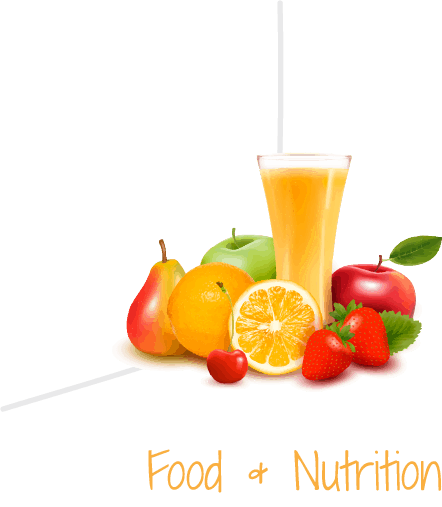
Third term is all about Health & Nutrition. Children discover the world of fruits, vegetables, meat, eggs and milk, and the importance of a balanced diet, oral care and dental hygiene. Parents are encouraged via the OASIS portal to send various items of food (that they have in their pantry at home) as and when the class explores those particular items. Lots of cooking classes and food touching, feeling and tasting make for a fun exploratory term. Children are encouraged to express their feelings and views, and they are prompted to engage in class discussions through these activities. During the phonics lessons, some initial blends are introduced such as “oo”, “sh” and “ch”. They are encouraged to count up to 10 both in ascending and descending orders and to broaden their logical thinking by spotting the odd one out. By now, their fine motor skills are usually well developed, and they start combining the four basic shapes to make simple drawings. French lessons are introduced in the afternoon this term. Children also work on a choreographed dance item for the end-of-year musical production which is attended by parents. For the final party, they come dressed up as a food item and parents tend to be very creative with the costumes.
4 Years
York class is for students who turn 4 in that particular academic year. York is a pivotal year in the Dukesbridge preschool cycle. This is the year when a child begins to show his or her personality, understand boundaries and assimilate more complex concepts. With fine motors well mastered in the ELY class, the child is now able to grip a pencil to trace and write letters out. Writing takes practice and parents who wish to accompany their child on this journey are encouraged to use a double-lined exercise book at home and send it in the school bag everyday for the teacher to update the letters covered at school.
YORK TERM 1
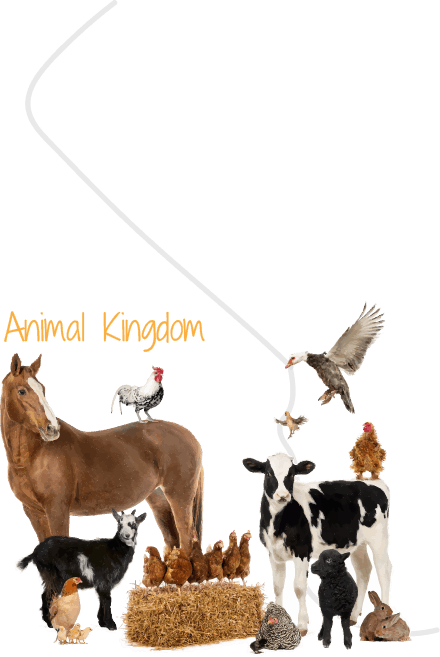
The theme for the first term is Animal Kingdom, a favourite for these curious little minds. Week after week, they are introduced to various categories of animals starting from farm animals to reptiles to the world of insects to the flying birds and finally wild animals. French lessons start with a discussion about the animals being explored in the week and then move on to educational video clips which are meant to be watched at home to build up their vocabulary. Whilst phonics remains the main thread for English language development that continues right through to primary classes, York class now labels the letters of the alphabet. So the letter [c] with the sound “kuh” has a name, and it is called “see”! Children learn counting and writing numbers 1 to 10 and explore other shapes such as the heart, moon and oval. They also move on to non-primary colours and begin to use their analytical mind to sort and compare. During the term, an outing to the safari park and petting farm is organised – first time on an outing without the parents! The end of term is marked by the break-up party where the kids come dressed up as their favourite animal.
YORK TERM 2
Our second term in York is themed Wonders of the Sea. Just like in the first term for animals, children are introduced this time to marine creatures every week, including different species of fish, corals, etc. Most lessons in the core subjects revolve around the theme. For example, silver and orange are new colours that are introduced this term by identifying the shiny salmon skin colour and the orange flesh underneath the skin. Similarly, the starfish helps to introduce the star shape to the class. Children engage extensively in arts and crafts activities to creatively demonstrate the knowledge acquired and new colours. The whole class works on a step-by-step construction of a clown fish (Nemo) using papier-maché, gluing and painting techniques over a number of days. For English comprehension, they use phonics to start deciphering words which go with the term’s theme like ‘anemone’. In Maths, children begin to explore the concept of picture addition with illustrations of two fish + one fish = 3 fish. The theme helps make learning fun. Alongside the class activities, students in York prepare for the Dukesbridge Games during their daily Physical Education lessons this term. The term ends with a fancy-dress party where the children come dressed as sea creatures and little mermaids!

YORK TERM 3
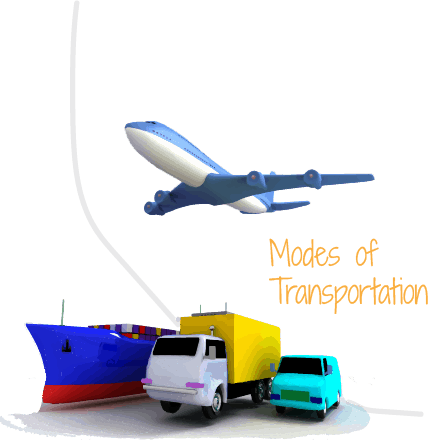
Third term is all about Modes of Transport – land, sea and air. Students explore the history of the engine and are prompted to wonder and ask the big questions like “how do we fly?”. Whilst such discussions take place in both English and French to encourage fluency in language development, science experiments bring these lessons to life. Children extend their numerical knowledge to 20 during this term and are also taught the roadway code in Maths class when learning about arrow and cross. By now, the children are used to identifying the sounds and names of the letters as well as writing them out. Time now to put letters together to form words. They learn how to write their names and other basic words learnt using the phonics method. Preparation for the Dukesbridge musical production takes place alongside the learning and the end of year is marked by a break-up party where children come dressed according to the theme.
5 Years
Windsor class is for students who turn 5 in that particular academic year. As the child gains in maturity, so does the complexity of our themes for the terms. Science, History and Geography follow the themes set and are intertwined with core subjects. Sight words are introduced this year to complement Phonics and storytelling with illustrated books is regularly used to ignite the passion for reading. The objective is for children to read, write and understand simple sentences by the end of the year. The proportion of French as part of the day increases in Windsor with some of the science and Maths lessons conducted in French.
WINDSOR TERM 1
The Windsor theme for the first term is Water, H2O. They explore the 3 states of water, the water cycle, water collection, the filtering process and conduct various experiments: the salt experiment, float vs sink, soluble vs insoluble, evaporation, etc. In Maths, children learn the concepts of full vs empty and the use of scale to measure liquids. A few more shapes are introduced this term, namely pentagon, hexagon and octagon. Children begin to sort and can add up to 20. This term, students are introduced to upper case letters of the alphabet. In addition to phonics which continues with word blends, children now learn sight words which are the high frequency words in the English language. Every week, they are given a handful new words which we recommend for parents to practise with them at home – both writing them out and recognising them in storybooks. Children also start writing out words in French. As in the previous years, kids attend the break-up party dressed up in the Water theme which can be quite tricky for parents!
WINDSOR TERM 2
Our second term in Windsor is all about Botany. The children get to explore the world of plants, from seed to fruit. Each child in the class plants his or her own bean in a cup and watches it germinate as the days go by. Unsurprisingly, lots of outdoor pottering around takes place in the garden as well. To go with the theme, we make 50 short sticks from bamboo shoots for our Maths lessons as we start to group them in tens and count up to 50. We use leaves to create patterns, add and subtract up to 20. Also in Maths this term, we introduce the concept of 3D shapes: cube, cone, cylinder, cuboid and sphere. The focus in literacy shifts to comprehension this term and children begin to make sentence construction to write. More sight words are added to the list from the previous term, and children are now encouraged to attempt to read sentences from a story book. Physical education focuses on learning and playing to the rules of a team sport, and the children engage in team races and relays for the annual Dukesbridge Games. The term ends with a fancy-dress party where the children come dressed up as flowers, plants and trees.
WINDSOR TERM 3
Third term of Windsor is the last term of preschool at Dukesbridge! And we finish with the Travel the World theme – starting from studying the globe, looking at the continents and oceans, then we look at 3 specific countries and their cultures, we go back in time to visit the fascinating ancient Egyptian civilisation during which we introduce the 3D shape Pyramid and finally look at the seven wonders of the world. Maths is a recap of everything covered these last two years with lots of addition and subtraction practice. We also introduce counting up to 100 along with basic clock reading. For literacy, four common verbs are introduced both in English (be, have, do, see) and in French être, avoir, faire, aller) to help our children construct simple sentences. By now, the children should be attempting to read and understand simple storybooks at home and practise their penmanship. They become confident in trying out new words, in speaking up and articulating feelings. A big component of this final term at preschool is to create memories with their friends before they part ways, and so there are plenty of discussions, games, free play and lots of fun in the extended drama and choreography lessons preparing the Windsor class for their Musical stage performance. For the final preschool party, the children come dressed up in traditional clothes from countries they have visited.être
6 Years
GRADE 1 is the first year of Primary school and is generally for students who turn 6 in that particular academic year. Each class has around 20 students. Core subjects include English, Maths, French and Science, and build on the concepts learnt in Windsor. We also have a couple of Arts and Physical Education sessions each week. Home Learning sheets are available on OASIS every Friday. By the end of the year, they are usually able to read short simple texts independently, using phonics sounds to attempt new unfamiliar words.
GRADE ONE TERM 1
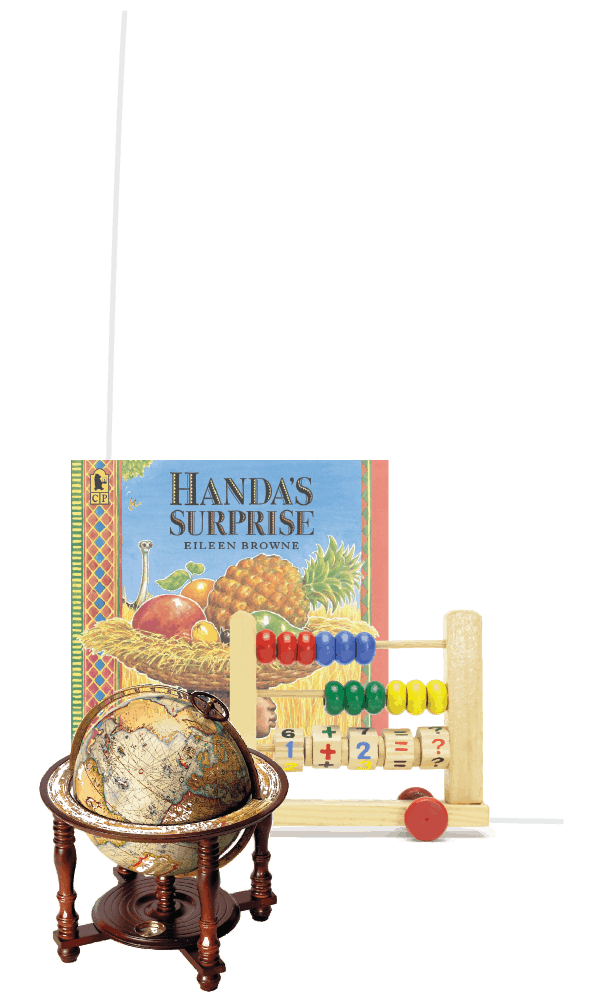
The children begin first term in Primary school with a recap of the phonics sounds and sight words before learning how to begin to blend the sounds to read new words. They learn about nouns and conjunctions as well as basic punctuation. Using the book ‘Handa’s Surprise’, the children begin to explore how a story is built and eventually create their own versions of the book. We focus on sentence structure and children are encouraged to use their phonics to help them spell. In Maths, we focus on numbers 0 – 100 and learn their values using units and tens. To help with addition and subtraction, the children are shown different techniques including number lines, number squares and the abacus. The children work on 2-digit number problems without carrying or borrowing at this stage. We begin the basics of multiplication by introducing skip counting in 2’s and 10’s. In Geometry, the children explore properties of 2D and 3D shapes and their differences. We also begin working on fractions such as ½ and ¼. Our French lessons center around “La maison” and “l’école”, and students distinguish between proper and common nouns. Science expands on previously introduced topics such as the 5 senses and our bodies. The children get a good awareness of the world as a whole and how it has changed throughout History. We even get to explore versions of our own future!
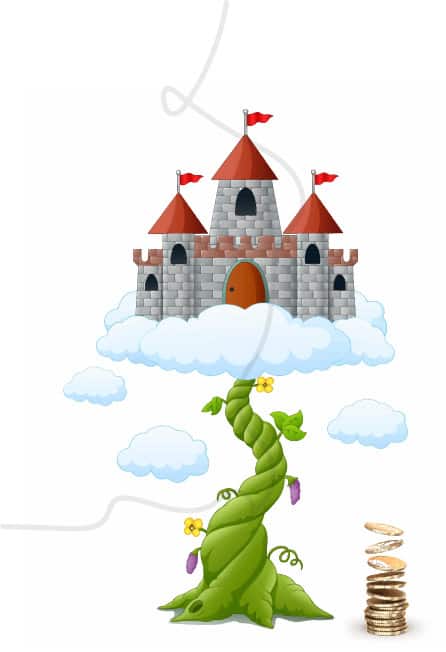
Our second term explores poetry and rhyming phrases. Phonics and sight words continue and extend into trickier words. Verbs and adjectives are introduced to help the children form interesting sentences independently. We begin to work on different formats of writing and expression, using ‘Jack and the Beanstalk’ story to help children use a reporting format. Taking an existing story and reworking it helps them imagine and create their own version. In Maths, the students identify the coins we use in the country. They learn the value of money and begin to complete monetary addition and subtraction number problems – playing shops becomes a highlight, especially in French when we are learning about “Les aliments”! For French, the children also learn the use of prepositions and the rules about the plural of words. In Geography, we study the globe including its continents, oceans and the Equator. The children complete some fun experiments to help them understand the World and its formation. Our Science topic links in with our English theme ‘Jack and the Beanstalk’ and we focus on plants building on what they had learnt in the previous year. The children investigate the way plants develop by growing their own beanstalks throughout the term. During these experiments, we record data and encourage the children to predict their thoughts on the outcomes. During this term, the children work on physical endurance and athletic disciplines ahead of the Dukesbridge Games.
GRADE ONE TERM 3
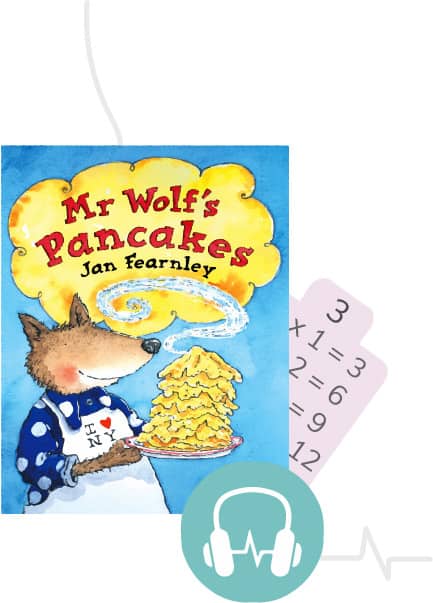
The third term explores different writing formats and this term explores letter drafting and instructions. The children have great fun creating their own instructions and following existing ones to make pancakes as a link to the story ‘Mr Wolf’s Pancakes’. We work on sequencing and sentence structuring before focusing on punctuation and spelling. We also look at contractions and begin to use them in our writing and reading. The children develop their inference and comprehension skills when reading and listening to simple texts. In Maths, we explore further multiplication and division by grouping and sharing objects. We learn about turns and giving directional instructions by utilising our outdoor spaces. Using informal tools and techniques, the children measure distance, weight and liquid. We also work on ordinal numbers and their ordering. In French, students explore the gender of nouns through the use of articles and adjectives. Arts is a fundamental component of this term which includes a project based on the Mauritian artist Vaco Baissac. We explore different ways to make sounds and how music can affect emotions. The year ends with our epic Dukesbridge musical production.
7 Years
GRADE 2 is the second year of Primary school and is generally for students who turn 7 in that particular academic year. As a general rule, we encourage creative writing and work is marked according to the learning objective of the lesson; not every word is corrected as this can have a discouraging effect on the children who are expected to be writing unfamiliar words using their phonics sounds and so will make spelling errors during this time. History and Geography becomes a core subject this year.
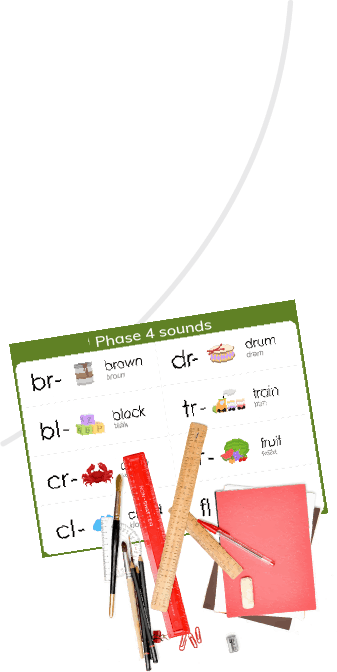
First term starts with learning other languages around the World through visual posters and songs. The children have a recap of the English phonics sounds and sight words and begin to focus on phase 4 sounds. They learn about pronouns and compound sentences. Using some carefully selected books like ‘The Giant Jam Sandwich’ and ‘Polly Parrot picks a pirate’, the children look closely at rhyming words, syllables and shape poems. They eventually create and design their own shape poem. We also explore types of books this term, in particular fiction and non-fiction and their features. In our Maths lessons, the children learn to skip count in 3s and use rote counting in 2s, 5s and 10s as part of learning the multiplication table. Numbers 0-100 are categorised in units and tens so that the children learn how to complete column addition and subtraction. They also learn lines of symmetry and measure weight, length and volume. There is an introduction to the concept of surface area and using concrete cubes they calculate the area of shapes. Science looks at types of materials, their sources and properties; students get to conduct several experiments this term to investigate and record their results. Furthermore, we explore types of maps, symbols, cardinal directions and an awareness of the local history including Independence. In French the children work on the themes “Mes amis” and “Les fêtes” and learn how to express feelings and emotions. They continue learning about prepositions and the present tense. Art lessons focus on a project based on the French artist Claude Monet.
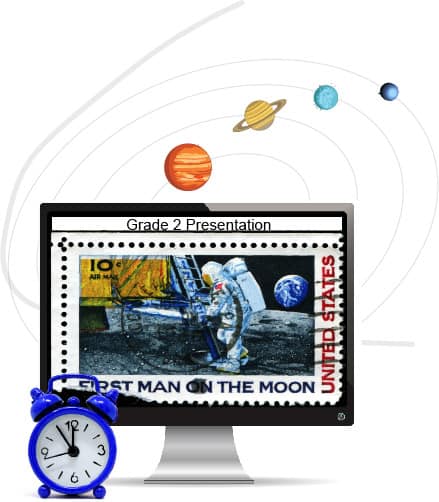
The second term extends the use of phonics to blend and read tricky words. Students are encouraged to use adverbs, adjectives, nouns and verbs in their independent sentence writing. Using fiction and non-fiction features, they create their own creative story and also a fiction page with fun facts and illustrations. The children are also introduced to antonyms and synonyms. Students start reading short passages and writing simple sentences. They continue learning the conjugation of the verbs: être, avoir, faire and aller. In Maths, we start with fractions such as ½ and ¼ and apply it to read and show time to half past, quarter past and quarter to. The children continue to use skip counting in 2s, 3s, 5s and 10s to learn their multiplication table and start solving word problems. We also begin to work on inversion, division and directions. In Geography, we learn about the solar system, the planets and their features. We also work on a person of interest, Neil Armstrong. While working in groups, the children create a PowerPoint presentation and design an interesting poster about the moon landing. They study the solar system, look closely at the different planets and their features. Our Science lessons revolve around Force, the types of forces and we conduct a series of experiments to help understand how force works. During this term, the children work hard on certain new sporting disciplines such as the Javelin and shot put and compete at the Sports Day event.
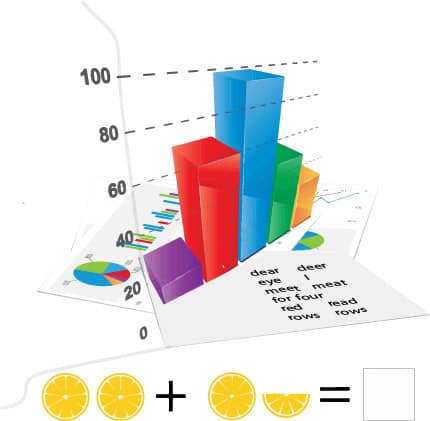
Our third term begins with formal and informal language as an introduction to using scripts in role plays. We explore contractions and work to perfect our handwriting and sentence writing. Using books like ‘Dear Deer’, the children learn about homophones, prefix and suffix. By the end of the term, they also work on persuasive talking and writing. For our Maths lessons, we work on Mauritian coins and notes and eventually complete monetary addition and subtraction through activities and shop role play. They are also introduced to thirds and use previous fraction knowledge ½ and ¼ to solve simple division word problems. We continue with cardinal directions and use our outdoor spaces to complete directional games and activities. The children also work on gathering information using tally charts and bar charts. In French, the use of subject pronouns and the agreement of adjectives are developed and students use these elements in sentence writing. In Art, we work on Haitian artist, Pierre Maxo, and eventually create a project using his techniques. In science, we investigate the life cycle of plants, humans and animals such as frogs and butterflies. In History and Geography, the children learn about famous explorers and their modes of transport. We also look at the differences and similarities between natural and man-made features in different areas around our school. The year ends with our Dukesbridge musical production which requires the children to practise a dance routine or acting parts.
8 Years
GRADE 3 is the third year of Primary school and is generally for students who turn 8 in that particular academic year. This year focuses on giving students the opportunity to expand their creative and descriptive vocabulary both orally and in their writing. Word problem is also a major theme this year as the children put their English comprehension skills into practice in the Maths class which reflects our approach to integrated learning.
GRADE THREE TERM 1
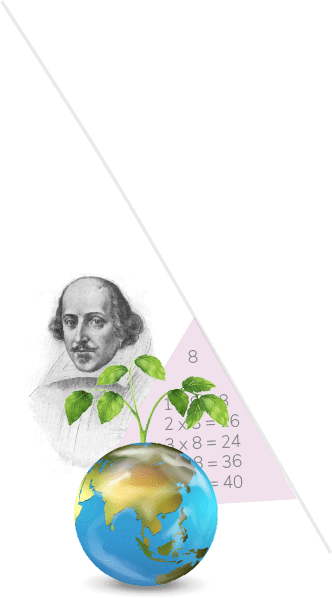
InTerm 1’s English class, the children are introduced to Shakespeare and a simple version of ‘A Midsummer Night’s Dream’. They create characters and a plot before forming their own ‘plays’ and performing for the class. In Maths, we look at multiplication tables 3, 4 and 8. When studying 3D shapes, the children use nets to replicate some of them. In addition to money word problems, we also cover Perimeter of squares, rectangles and triangles. Building on the botany themes explored in previous years, Year 3 students conduct experiments to investigate what a plant requires to grow in Science class. They plant beans under various conditions, for example one is kept in the dark, one is not watered and so on. Throughout this practical module, students learn how to table an experiment with variables. Furthermore, the class studies the human muscles and bones as well as the anatomy of a flower by dissecting a flower to have a close look at the parts. Mountains, rivers and waterfalls are the main topics for Geography. Learning about the formation of mountains helps students understand the movement of tectonic plates. They also track the journey of fresh water from rivers to the sea. In French, past and future tenses are introduced and emphasis is laid on punctuation and the negative form of sentences.
GRADE THREE TERM 2
In the second term, children start using sophisticated vocabulary to convey information. Story writing is enhanced through the use of direct speech, prefixes, suffixes and adjective. In French, also, students are encouraged to write creatively as we continue to work on more complex sounds and verbs, adjectives and pronouns as well as the interrogative form. By role playing, the children understand the concept of intonations, for instance by varying their pitch, they can add emotions to passages. In Maths, children place value on numbers 1 to 1000. They learn how to add and subtract 2- and 3-digit numbers and start formulating mental arithmetic strategies. They continue to learn the multiplication table this term as well as learning about time 24hr clock- analogue and digital. A series of brain teasers become the fascination of our Maths lessons as they focus on finding the logic behind the complexity of word problems. In Geography, children recap what they have already learned about the role of water, the water cycle and causes and prevention of water pollution. They also acquire a general knowledge of the topographical features of the world.
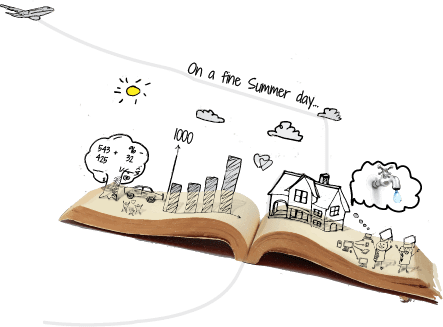
GRADE THREE TERM 3
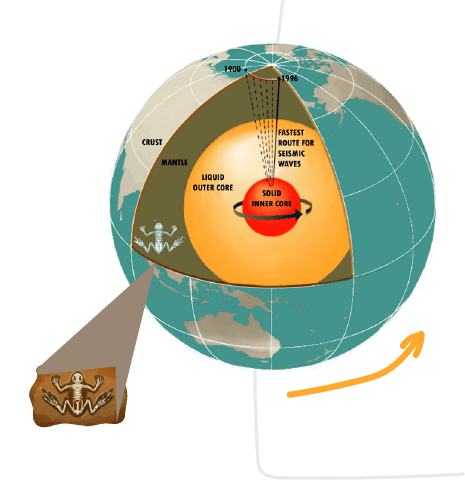
In the third term, we explore interrogative, imperative and exclamatory sentences. We also use modal verbs and adverbs to help enhance sentences and create interesting and dramatic pieces of writing. The passages are carefully integrated into our History lessons focusing on the diversity of cultures and national origins. While investigating fossils in Science, the children become paleontologists by creating their own fossils. They learn the process by which fossils are made and why they are important. We also work on different states of matter and conduct experiments manipulating different states and how other forces can affect them. French class revolves around the Past and Future tenses of verbs. Children develop sentences about their dreams and future aspirations. In Maths, we make the link between fractions and decimals and learn how to add and subtract fractions with the same denominator. The children identify fractions of numbers leading into the comparison and ordering of fractions and measurements. We also begin to understand factors and how to identify them. In Geography, we look at longitudes and explore the different time zones. We learn why the times vary due to the movement of the Earth. We finish the term working on how magnetic forces affect the movement of the Earth and our day to day lives.

Terms & Conditions
All text, images and media on this website are property of Dukesbridge and Sikra Co Ltd. Reproduction of any elements of this website in part or whole is not allowed unless written consent is given by Sikra management.